

The four trauma responses in relationships – mapped out
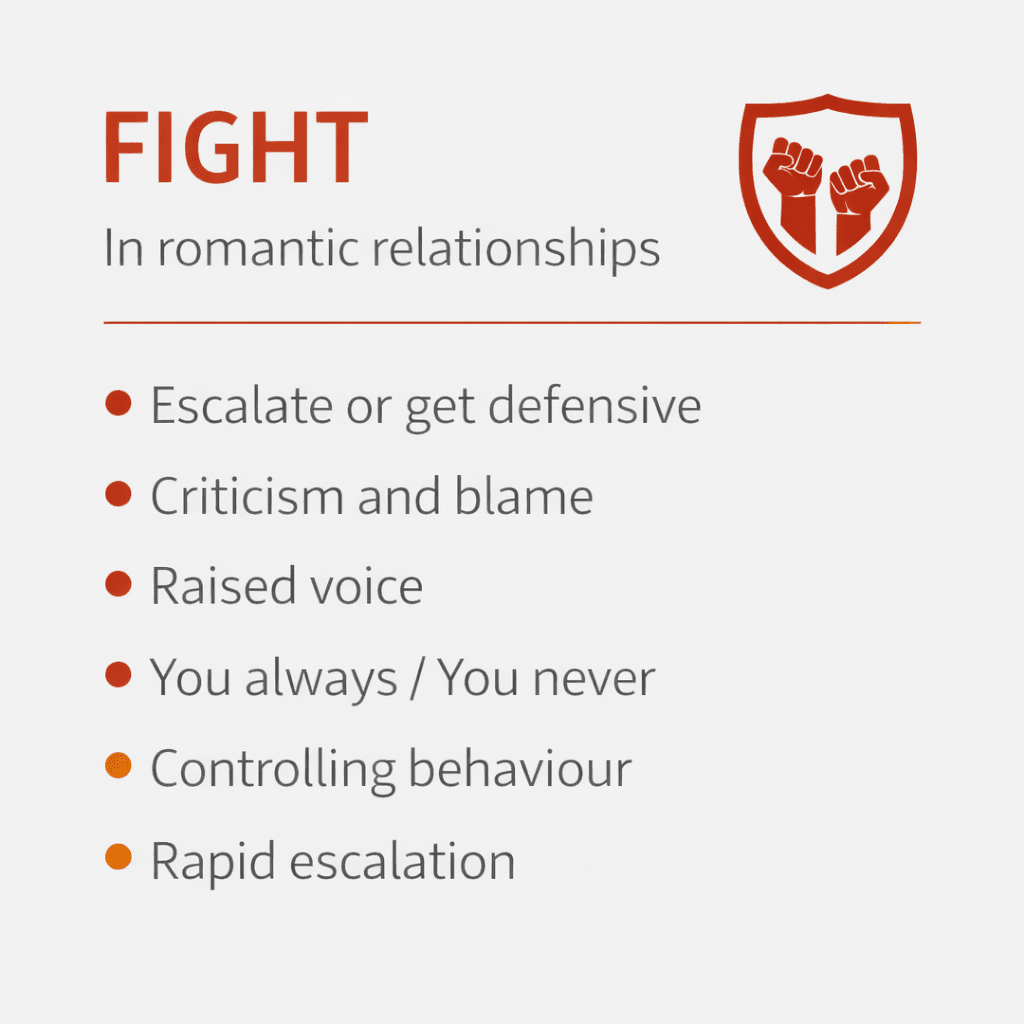
I put together a visual breakdown of how fight, flight, freeze, and fawn responses typically show up in romantic relationships, with common behaviours for each. Sometimes seeing it mapped out helps you identify your own patterns more clearly.
Comments (10)
This visual is incredible. Seeing all four responses laid out side by side with the relationship behaviours they produce – it makes it so much easier to identify. I'm definitely a fight-fawn hybrid. Fight with my partner, fawn with everyone else. Anyone else a combo?
Dr. Thornton, this is such a helpful resource. I've seen the four responses described in text before but the mapping to specific relationship patterns makes it click in a different way. The fawn column – prioritising partner's needs, difficulty expressing preferences, chronic over-giving – that was my entire last relationship distilled into a chart.

I am glad it resonates. The intention behind the mapping was precisely this – to make the abstract concrete. When individuals can point to a specific pattern and say 'that is what I do,' it transforms a vague sense of dysfunction into a clear, workable target for change.
freeze column is basically my autobiography. 'emotional shutdown during conflict,' 'difficulty accessing feelings in real time,' 'appearing indifferent when overwhelmed.' all of it.
I shared this with two friends and they both immediately identified themselves in it. One said she'd never understood why she people-pleases so intensely in relationships until she saw it mapped out as a trauma response. This kind of visual makes the information accessible to people who might not read a whole article about it.
Something I notice is that the flight response doesn't get talked about as much in relationship contexts. But the patterns listed – avoiding difficult conversations, staying busy to avoid intimacy, emotionally withdrawing when things get close – I've seen those in partners and never connected it to trauma before.
That is an astute observation. The flight response in relationships is often mislabelled as avoidant attachment without recognising the trauma underpinning it. The behaviour may look like disinterest, but the nervous system is in a state of activation – it is fleeing perceived relational danger, not lacking the desire for connection.
I would add that these responses are not fixed categories. As has been discussed in earlier posts, many of us shift between responses depending on context. The value of this visual is not in creating a permanent label but in building awareness of the patterns as they arise. Thank you for creating this, Dr. Thornton.
More from #traumainrelationships
That argument about dishes? It might actually be a trauma response
I fawn in every argument and I hate it
Your partner isn't your parent – but your nervous system doesn't know that yet
Does anyone else struggle to receive comfort from their partner?
I told my partner about my trauma and they didn't run

1.9K members
Exploring how trauma shows up in conflict, attachment, communication, and repair. A space for understanding relational patterns rooted in past experiences and learning to build healthier connections.