
What's your default trauma response in conflict?
When conflict arises in a relationship, which response do you most often default to?
95 total votes


95 total votes
Just realised I do this thing where I immediately agree with everything my partner says during an argument, even when I don't actually agree. Then I feel resentful afterwards. Apparently it'...
I've been reading about co-regulation – the idea that one person's calm nervous system can help regulate another's. It's how healthy attachment develops in childhood: a caregiver's steady pr...
I've been putting off this conversation for months. I was terrified that if my partner knew the full picture of my childhood, they'd see me differently – as damaged, or too much, or someone...
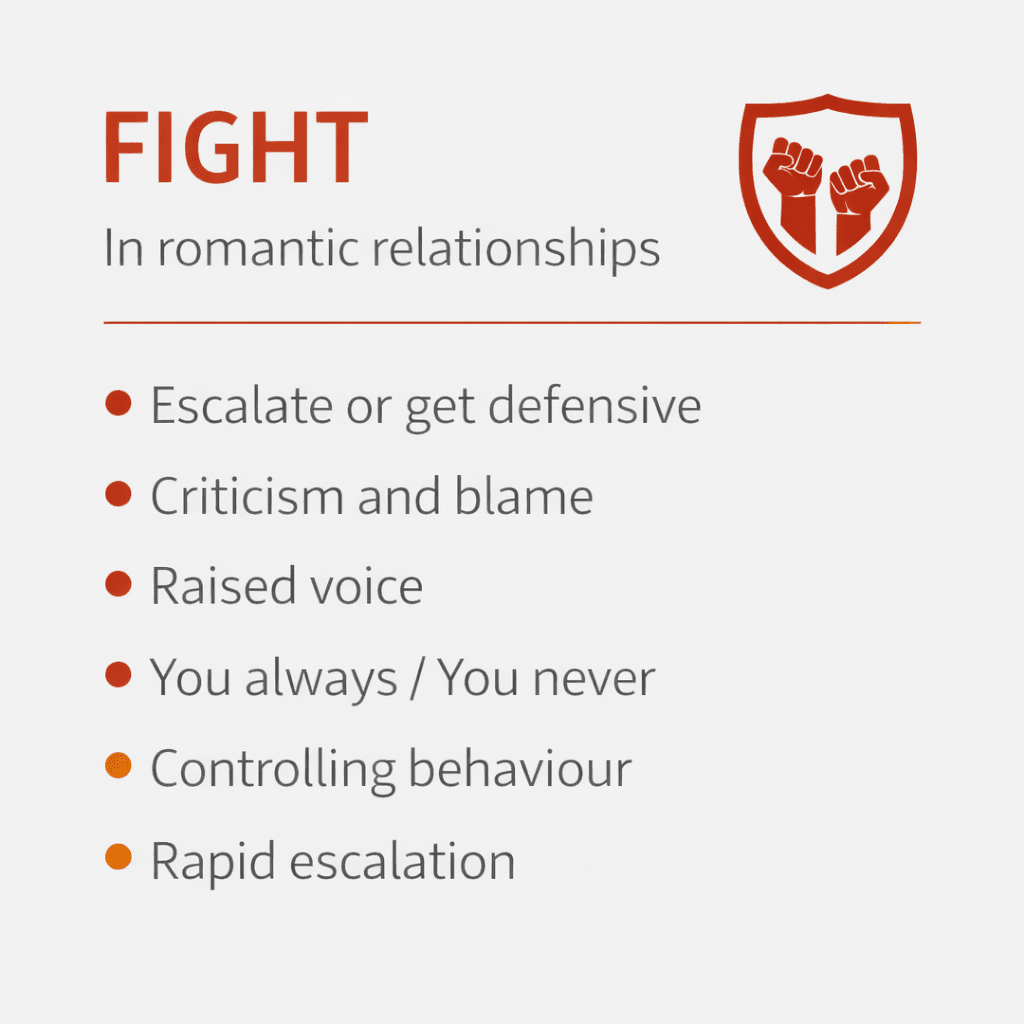
When trauma is present, conflict activates survival responses rather than rational problem-solving. Fight, flight, freeze, or fawn – what looks like an overreaction to a small disagreement i...
Something my therapist said that completely reframed things for me: 'Your adult relationships are the stage where your childhood dramas get replayed.' I kept picking partners who were emotio...
Exploring how trauma shows up in conflict, attachment, communication, and repair. A space for understanding relational patterns rooted in past experiences and learning to build healthier connections.
1. Own your perspective
Use 'I' statements. Describe your experience, not your partner's failings.
2. No diagnosing others
Don't label someone's ex or partner as a narcissist, abuser, or any other clinical term. Focus on patterns and behaviours.
3. Content warnings for abuse
Discussions of abusive relationships require content warnings. Keep descriptions focused on patterns, not graphic details.
4. Repair is the goal
This space is about understanding and healing, not about blame or revenge. Posts focused purely on venting about another person will be redirected.
