

Recommended reading: Understanding anxiety from a neurobiological perspective
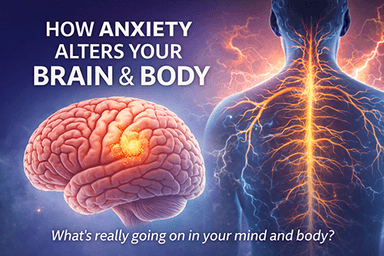
Anxiety isn't just 'in your head' – it's deeply rooted in your brain and body. This article breaks down how the amygdala, prefrontal cortex, and hippocampus work together during anxiety, and explains the role of the sympathetic and parasympathetic nervous systems. Understanding the biology can reduce shame and shift the narrative from 'What's wrong with me?' to 'My brain is trying to protect me.' Worth a read if you want clarity on what's happening when you feel overwhelmed.
Comments (10)
Just finished reading this – really interesting! I never fully understood the amygdala's role before. It's reassuring to know there's a biological explanation for what we experience.

Understanding the neurobiology often helps reduce self-blame. When you recognise your amygdala is firing a false alarm, it becomes easier to respond to anxiety as a signal rather than a truth.
bookmarked this. the section on the prefrontal cortex was really helpful. explains why it's so hard to think clearly when you're anxious.

bit science-heavy for me but the summary at the end was useful. nice to understand what's actually happening in my brain.
I appreciate the honesty. I may share some more accessible resources in the future that cover the same concepts in simpler terms. Understanding the basics is what matters most.
that would be great actually. thanks.
thanks for sharing this. the part about the nervous system getting stuck in threat mode made a lot of sense.
I keep coming back to the bit about neuroplasticity – the idea that the brain can actually rewire itself through practice. Makes all these techniques we talk about here feel more hopeful!
More from #anxietytoolbox

2.8K members
Practical tools for managing anxiety – grounding techniques, exposure planning, breathing exercises, and honest 'what worked for me' discussions. A space to share strategies that translate from theory into real life.